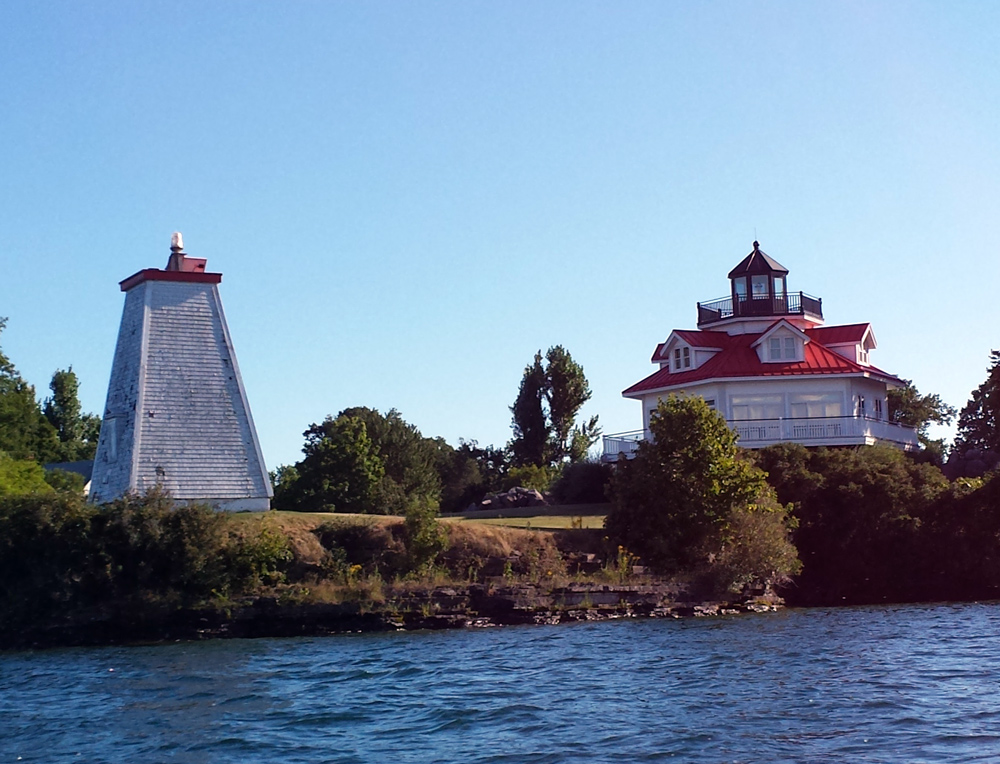
The Québec Head Lighthouse at Port Metcalfe at the most eastern end of Wolfe Island.
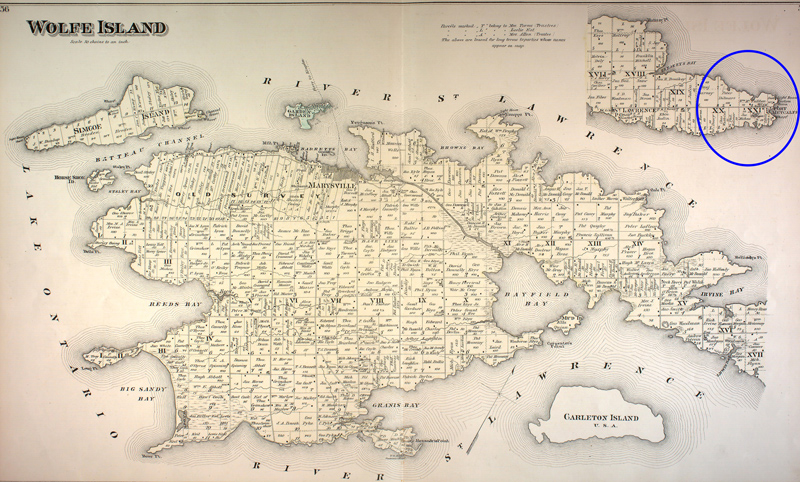
1878 Meacham Atlas Map
At the eastern tip of Wolfe Island stands one of the island’s best-known historic landmarks: the Québec Head Lighthouse. Located where Lake Ontario meets the St. Lawrence River, the lighthouse has helped guide ships safely through local waters for more than 160 years.
Wolfe Island is unique within the Thousand Islands region for many reasons. Not only is it the largest island in the Thousand Islands, itis also one of the few islands to still have two surviving and functioning lighthouses.
Over the years, the eastern point of Wolfe Island has been known by several names, including East Point, Hemlock Point, Port Metcalfe, Québec Point, and Québec Head.
Building a Lighthouse at Quebec Head
The eastern end of Wolfe Island was seen as an important place for guiding ships as early as the 1850s. At the time, shipping traffic along the St. Lawrence River was increasing, and steamboat captains called for better navigation aids between Kingston, Gananoque, and Brockville.
Canada began a major lighthouse-building program in the Thousand Islands in 1856, adding lights at several important points along the river. The Wolfe Island light was officially established on October 25, 1861.
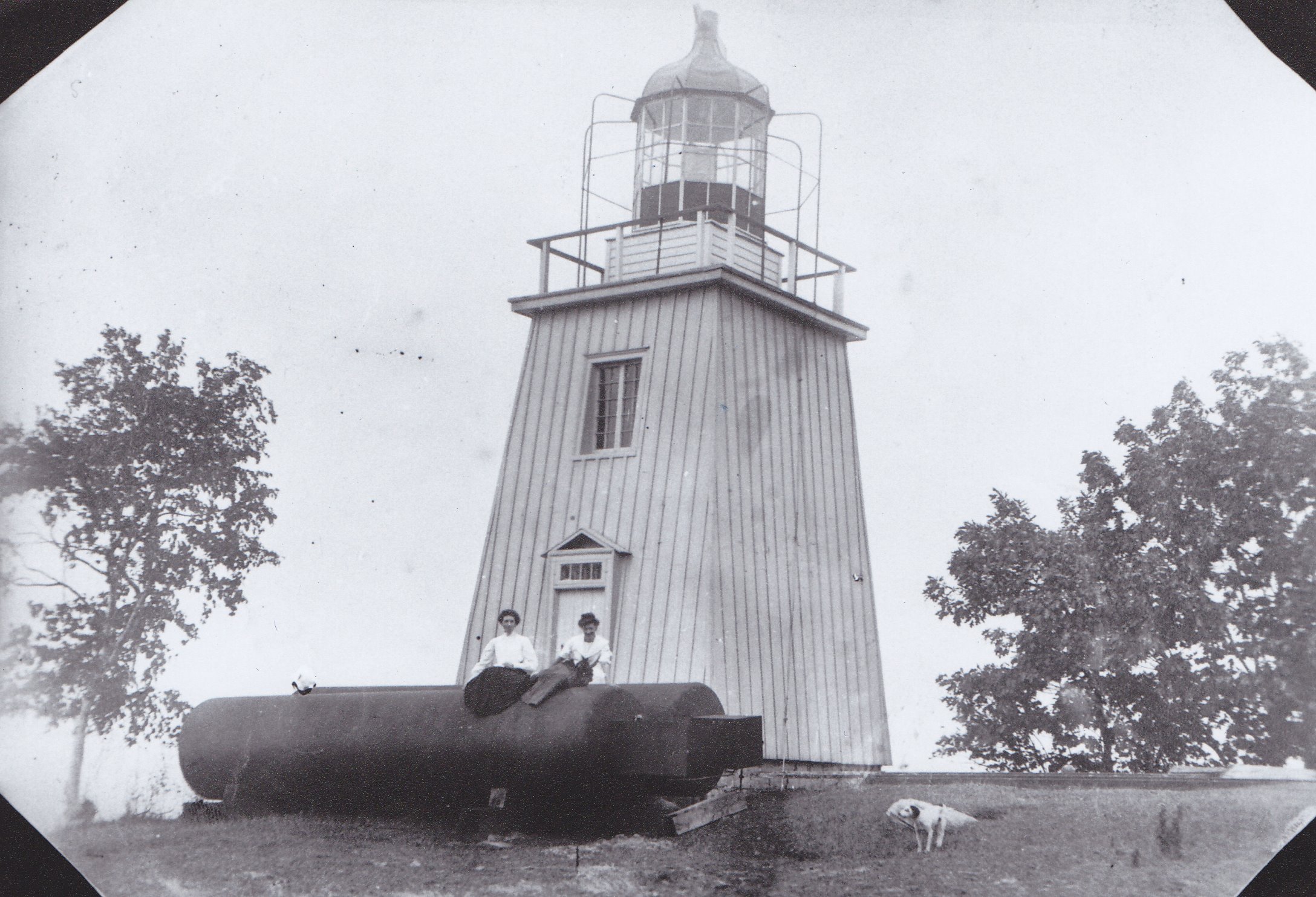
First Lighthouse at Québec Head - Della [Gillespie] Bullis Collection
Records from the time suggest that government officials considered moving the former Fiddler’s Elbow lighthouse to Wolfe Island. However, historians now believe a completely new lighthouse was likely built instead.
The original lighthouse was a simple wooden structure with four sloping sides, painted white and standing about 36 feet high. Like many Canadian river lighthouses of the period, it was built as economically as possible. The total construction cost in 1861 was just $470.50.
The Gillespie Family and the Lighthouse
The first keeper of the Wolfe Island lighthouse was Thomas Kilty, who served in 1862 and 1863. Assisting him was Robert Gillespie, who soon became the sole keeper of the light.
Robert Gillespie remained keeper until 1885, serving for more than twenty years. During that time, a keeper’s dwelling was built near the lighthouse, and the lighthouse became an important part of life at the foot of Wolfe Island.
In 1877, a government inspector described the lighthouse as:
“A square white building, containing a fixed catoptric light, 36 feet high.”
The inspector also noted that Robert Gillespie kept the lighthouse “in good order.”
One local newspaper story from 1882 showed Gillespie’s sense of humour. After rumours spread that he had died, Gillespie personally visited the newspaper office to prove he was still alive and well.
When Robert Gillespie retired in 1885, his son William Gillespie took over as keeper. William would remain in the position for more than fifty years, beginning a long family connection to the lighthouse. Altogether, the Gillespie family cared for the light for at least 77 years.
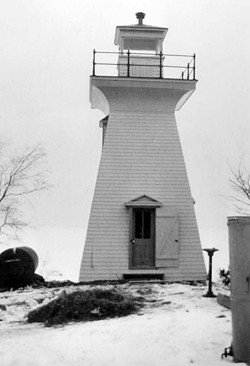
Second lighthouse at Québec Head 1912 - Photograph courtesy Library and Archives Canada
Changes Over Time
Like many wooden lighthouses, the Québec Head lighthouse required regular repairs due to wind, weather, and exposure along the river.
Over the years, the lighthouse also saw major changes in lighting technology. The earliest lights burned whale oil before later switching to coal oil. In 1904, the light was converted to acetylene gas, which made lighthouse operation much more automatic.
Then, somewhat unexpectedly, the system was changed back to coal oil in 1912.
In 1911, the lighthouse itself was rebuilt. The new tower was described as a white wooden lighthouse with a red lantern roof, standing approximately 33 feet high above the water.
Electricity finally arrived at the lighthouse in 1954, further reducing the need for a full-time keeper.
The Final Keepers
William Gillespie was still officially listed as keeper in 1939. Later records describe the lighthouse as a “watched light,” meaning someone still checked and maintained the station even though it was becoming increasingly automated.
Local records and family accounts indicate that Everett Woodman cared for the lighthouse from the 1940s until his retirement in 1954.
By 1960, Québec Head was officially listed as an “unwatched light,” marking the end of nearly a century of resident lighthouse keepers at the station.
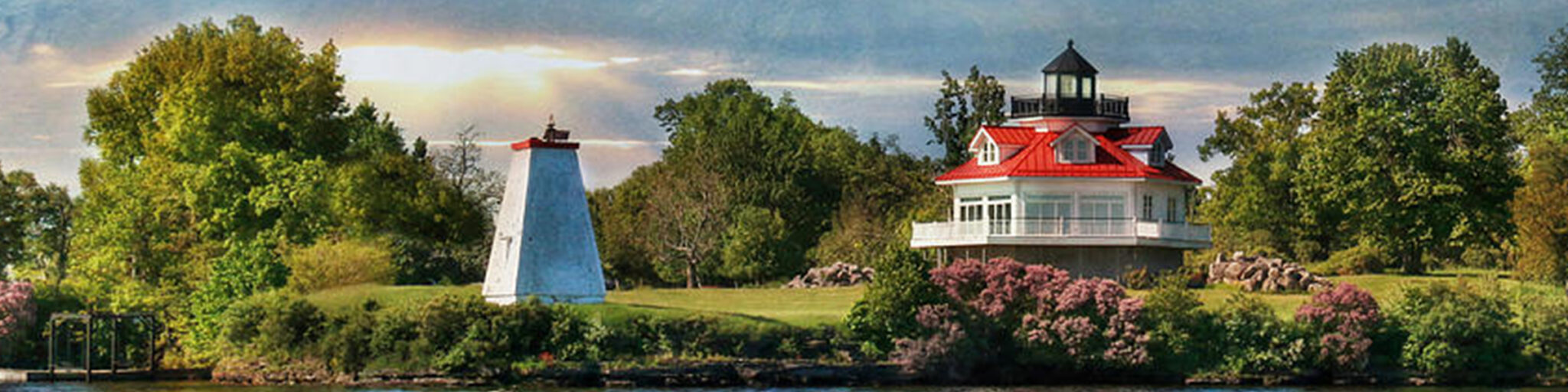
The Quebec Head Lighthouse (left) with a private residence to the right (replica Thomas Point Shoal Lighthouse in Maryland). August 2015. Photo by Shauna Kingstone.
The Lighthouse Today
Today, the Québec Head Lighthouse still stands at the foot of Wolfe Island as an important reminder of the island’s maritime history.
Over time, parts of the original structure were removed, likely during rebuilding work completed in 1971. While the lighthouse no longer appears to operate as a traditional lighted beacon, the remaining structure continues to serve as a recognizable navigation point along the St. Lawrence River.
Today, the lighthouse stands beside a striking private residence built as a replica of the famous Thomas Point Shoal Lighthouse in Maryland, creating one of the most recognizable waterfront scenes on Wolfe Island.
Known Keepers of Québec Head Lighthouse
Thomas Kilty (1862 – 1863)
Robert Gillespie (1862 – 1885)
William Gillespie (1885 – 1939)
Everett Woodman (1940s – 1954)
Preserving Wolfe Island’s Maritime Heritage
For generations, the Québec Head Lighthouse helped guide ships safely through the waters at the foot of Wolfe Island.
Today, it remains an important reminder of the island’s connection to shipping, trade, and life along the St. Lawrence River – and of the families who cared for the lighthouse for generations.